Situation Brief
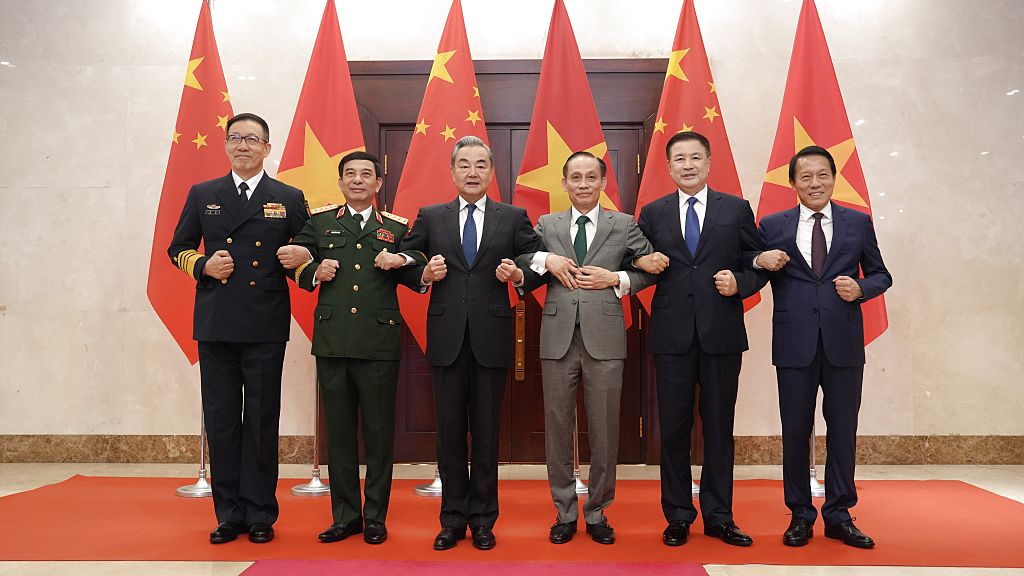
Vietnam’s diplomatic dance is reaching a pivotal juncture. In March, Hanoi hosted its first ever “3+3” summit with China, signaling continued regional engagement with Beijing even as it deepens security and economic ties with the United States. The balancing act reflects Vietnam’s broader strategy to preserve its autonomy, attract investment, and safeguard development gains amid intensifying competition between Washington and Beijing. Yet the domestic political environment, bureaucratic inertia, and public opinion constrain how far Hanoi can tilt toward any single power without inviting friction at home or with neighboring peers.
Strategic Stakes
Vietnam’s posture sits at the intersection of three critical challenges: sustaining robust growth, maintaining strategic independence, and managing external pressures from great powers. A more overt alignment with the United States could bring enhanced security guarantees, access to advanced technologies, and better support for infrastructural resilience. However, it risks provoking a stronger Chinese counterbalance, complicating Vietnam’s already delicate regional security calculus and potentially raising costs for trade and investment. Conversely, an overly China-centric approach could threaten Hanoi’s hopes for diversified energy and supply chains, while curbing its room for maneuver in multilateral forums and global markets.
Impact on US Interests
For the United States, Vietnam represents a linchpin in Southeast Asia’s strategic architecture. Closer ties can fortify mutual defense commitments, expand defense technology transfer, and bolster supply-chain resilience in critical sectors such as semiconductors, telecommunications, and green energy. Yet Vietnam’s hedging strategy—engaging China while expanding security cooperation with the United States—complicates Washington’s leverage and signals that Hanoi will seek to maximize gains from both powers. U.S. policymakers must calibrate incentives to sustain Vietnam’s strategic autonomy while guarding against instability in regional alliances or economic spillovers from intensified great-power competition.
Global Power Dynamics
The Vietnam calculus mirrors broader competition between Washington and Beijing for influence across Southeast Asia. Vietnam’s recent summit with China underscores Beijing’s continuing appeal as a partner for development and regional connectivity. At the same time, Hanoi’s growing alignment with U.S. policy initiatives—such as maritime security, anti-terrorism cooperation, and digital governance standards—signals a shift toward a more rules-based orientation in several sectors. The risk is a “too many plates” scenario: domestic reform, economic reform, and external alignment all moving in different directions, potentially straining the government’s capacity to deliver on promises to its citizens.
Forward-Looking Risks
- Domestic political bottlenecks: Vietnam’s governance model, with a single-party system, can slow decision-making and policy implementation. Economic reforms may stall if administrative factions resist changes seen as favoring one external partner over another.
- Economic vulnerability: While U.S.-Vietnam ties bring technology and investment, reliance on external demand and regional supply chains could expose Vietnam to shocks from global market swings or trade frictions.
- Regional tensions: Vietnam’s proximity to sensitive flashpoints in the South China Sea increases the risk of miscalculation or accidental clashes that would compel greater international mediation or intervention.
- Public sentiment: Domestic skepticism about over-dependence on foreign powers could constrain policymakers from pursuing aggressive realignments, especially if reforms affect employment and cost of living.
What Comes Next
Vietnam is likely to continue a multi-vector strategy: deepening defense and technology collaborations with the United States, expanding high-tech manufacturing and green-energy partnerships, and maintaining a pragmatic, issue-by-issue relationship with China. Expect more high-level dialogues, periodic arms transfers or joint exercises, and coordinated efforts on regional stability, cyber governance, and supply-chain resilience. Important will be Hanoi’s articulation of a clear economic roadmap that reassures citizens and investors that diversification does not come at the expense of local industries or job security.
Policy and Governance Implications
Vietnam’s approach demonstrates the enduring tension between strategic hedging and the pursuit of predictable policy environments. Washington should pursue a calibrated partnership that values Vietnam’s sovereignty while offering tangible benefits—technology transfers, workforce development, and robust regional security assurances—that align with Hanoi’s stated development goals. Beijing, for its part, will likely continue to offer preferential access to markets and investment, reinforcing the need for the United States to present a credible alternative path that does not appear coercive.
Bottom line
Vietnam’s balancing act remains viable in the near term, but domestic political dynamics, economic pressures, and evolving regional security concerns will test its resilience. For the United States, Vietnam’s trajectory offers a critical case study in how to engage a pragmatically non-aligned partner that seeks to maximize advantage from multiple great powers while maintaining its own political and economic sovereignty. The next 12 to 24 months will be decisive in determining whether Vietnam can sustain this delicate equilibrium or be pulled toward a more singular alignment under external pressure.