Situation overview
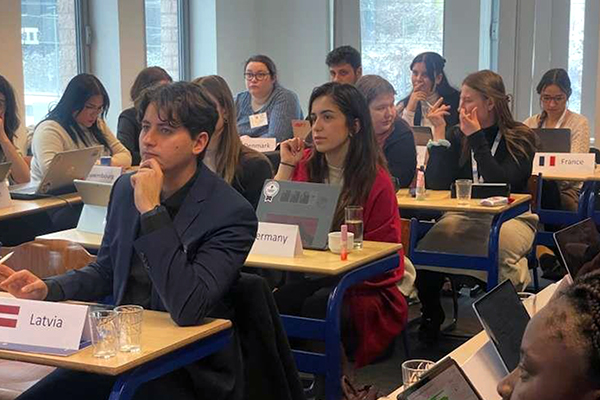
A U.S. university program underscores the growing role of experiential learning in international relations. For the third consecutive year, Cortland—home to a robust political science and global studies ecosystem—joined the Global Model European Union (Global MEU), a simulation that places students in the roles of European policymakers, regulators, and diplomats. The event serves as a practical bridge between classroom theory and real-world governance, offering a window into how U.S. students are preparing for careers that require nuanced understanding of international policy, diplomacy, and regulatory processes.
What makes Global MEU relevant to the broader policy landscape
The Global MEU format emphasizes collaboration, compromise, and rapid policy drafting under time pressure. Students debate budget allocations, trade rules, climate commitments, and cross-border regulatory standards—mirroring the complexities faced by actual European Union decision-makers. For U.S. participants, this experience translates into familiarity with multilateral decision-making, coalition-building, and the balancing of national interests with global priorities. In an era of rising geopolitical competition and global governance challenges, such programs can cultivate a generation of leaders who navigate cross-border issues with greater fluency.
Impact on student skills and career pathways
Participants develop concrete competencies valuable in public service and private-sector policy roles:
- Policy drafting and negotiation: Crafting resolutions, amendments, and official statements that align with strategic objectives and legal constraints.
- Regulatory literacy: Translating non-tariff barriers, environmental standards, and digital regulatory regimes into actionable policy proposals.
- Communication across cultures: Presenting, defending, and persuading diverse international audiences in a high-stakes environment.
- Project management and teamwork: Coordinating research teams, timelines, and deliverables under structured competition formats.
These experiences are increasingly relevant as U.S. universities expand cross-border programs to prepare students for roles in government agencies, think tanks, international organizations, and multinational firms that interact with Europe, NATO, and global markets.
Policy and governance implications for U.S. higher education
The sustained participation in Global MEU signals several trend lines for the higher education policy ecosystem:
- Expanded international affairs curricula: Universities are integrating immersive simulations and experiential learning to complement traditional lectures, aligning with employer demand for practical policy acumen.
- Support for student diplomacy pipelines: There is growing recognition of the value of early leadership development in diplomacy, international trade, and regulatory affairs.
- Emphasis on global competencies: Programs increasingly measure outcomes related to cross-cultural collaboration, data-driven policy analysis, and ethical decision-making in complex governance contexts.
What this means for 2026 and beyond
- Strengthening cross-border partnerships: U.S. institutions may seek formal alliances with European and multinational stakeholders to enrich simulations, provide authentic policy contexts, and offer post-event internships or project collaborations.
- Diversifying participation: There is potential to broaden access to historically underrepresented student groups, expanding the demographic and intellectual diversity of future policymakers.
- Linking simulations to real-world policy debates: Universities could integrate debriefs that connect simulation outcomes with ongoing EU policy discussions, regulatory reform initiatives, or U.S.-EU strategic dialogues, enhancing relevance to current events.
Public and institutional reception
Faculty, students, and alumni tend to view Global MEU participation as a high-impact experiential learning signal. It demonstrates an institution’s commitment to preparing students for the realities of international governance and policy implementation. In practical terms, this may translate into stronger internship pipelines, enhanced recruitment for political science and public policy programs, and increased visibility in national forums that discuss education and diplomacy preparation.
What comes next
As U.S. higher education continues to emphasize global literacy and practical governance training, programs like Global MEU are likely to expand in scope and scale. Universities may seek to:
- Broaden the cadre of participating schools to include more regional and minority-serving institutions.
- Introduce accompanying capstone projects that require students to design policy briefs addressing current EU-U.S. regulatory or trade issues.
- Develop alumni networks that connect participants with ongoing international policy conversations and career opportunities.
Bottom line
Cortland’s continued engagement with the Global Model European Union illustrates a growing commitment to cultivating globally minded policymakers right on campus. By blending analytical rigor with hands-on diplomacy practice, this initiative helps prepare a U.S. student cohort capable of contributing meaningfully to international policy debates in 2026 and beyond.