Situation Brief
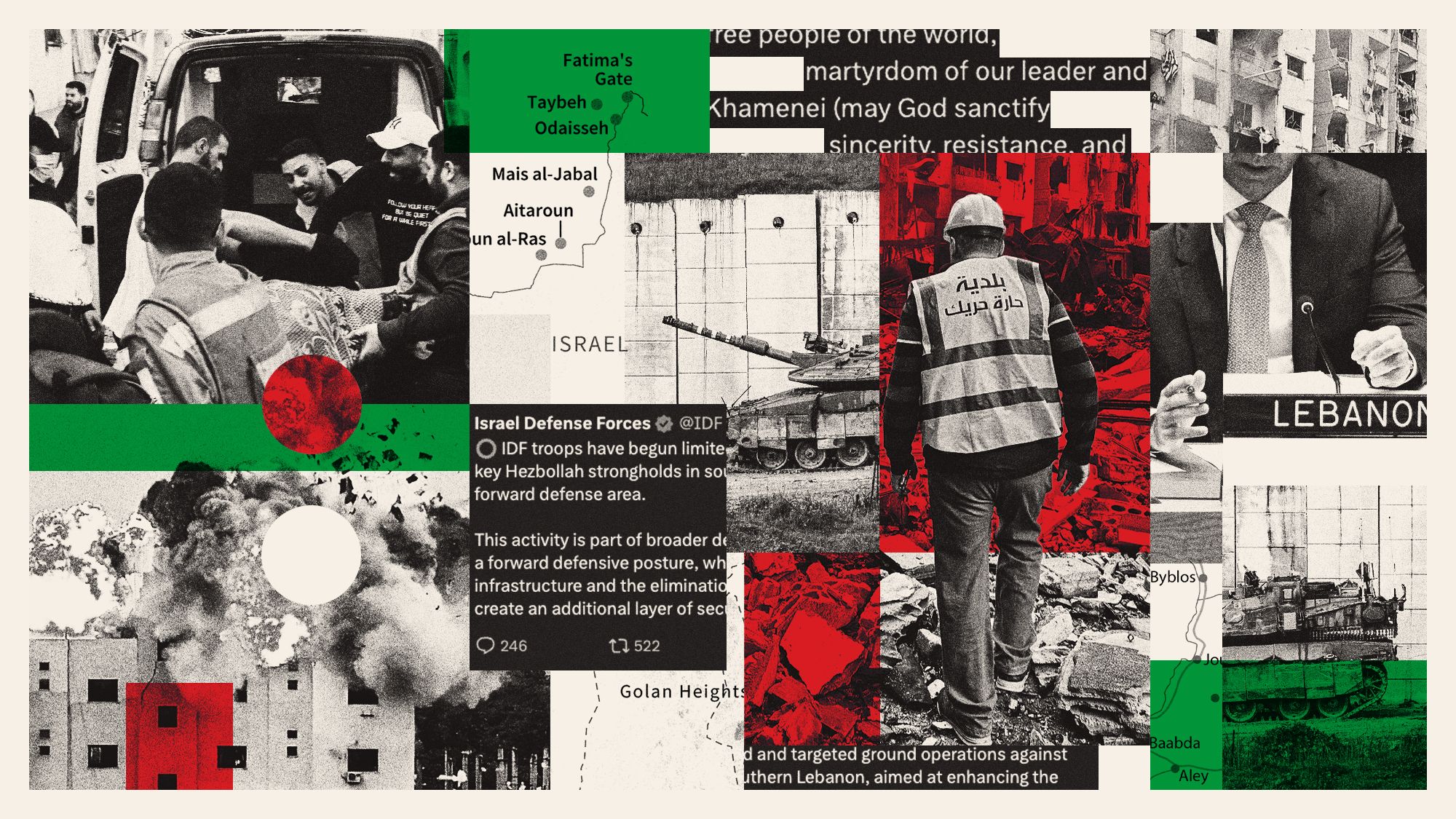
Israel has escalated its military campaign in Lebanon by launching a substantial ground offensive against Hezbollah targets. The move marks a sharp intensification after months of raids and artillery exchanges along the Lebanon-Israel border. Early indicators suggest the operation aims to degrade Hezbollah’s military capabilities, disrupt cross-border rocket fire, and preempt potential Hezbollah-IS-linked escalations in neighboring Syria. Yet the campaign also raises the prospect of a broader regional collision, drawing in proxies, neighboring states, and international actors with strategic stakes in the outcome.
Strategic Stakes
The Lebanon front sits at a critical juncture of regional power balances. Hezbollah’s resilience, supported by its extensive missile arsenal and fortified tunnel networks, means any ground operation could become a protracted, high-casualty contest. For Israel, the campaign seeks to restore deterrence after a wave of border incidents and to limit Hezbollah’s ability to threaten northern Israel’s civilian and military infrastructure. For Tehran, Hezbollah’s involvement is a key vector of influence in the wider Iran-Israel confrontation, potentially widening or prolonging the regional conflict.
Impact on U.S. Interests
The United States has a direct interest in preventing a wider conflagration that could disrupt global energy flows, intensify regional refugee flows, or destabilize allied partners in the Middle East. Washington’s calculus includes safeguarding the security of Israel, maintaining the viability of the Lebanese state’s stability, and preventing spillover into Syria and Iraq. Policymakers must weigh immediate humanitarian concerns against longer-term strategic aims: deterring Iranian-backed expansion, preserving the credibility of U.S. security commitments, and avoiding a broader confrontation that could complicate negotiations with adversaries and allies alike.
Global Power Dynamics
The confrontation underscores a multipolar regional order where non-state actors, regional powers, and major powers influence outcomes. Hezbollah’s strategic posture embodies a hybrid model—combining political glue within Lebanon with asymmetric military capabilities. The intervention tests Israel’s conventional military edge and intelligence-driven operations while inviting international diplomacy to de-escalate. Global powers—whether through sanctions regimes, mediation efforts, or military posturing—will likely seek to calibrate responses to avoid a wider regional war while signaling red lines to all protagonists.
Forward-Looking Risks
- Prolonged Ground Campaign: A drawn-out offensive risks higher civilian casualties, public outrage, and potential destabilization of Lebanese governance structures, complicating humanitarian access and international aid coordination.
- Escalation Beyond Lebanon: Exchanges across Syria and internal political pressures within Israel and Lebanon could trigger rapid, multi-front dynamics that challenge regional security frameworks.
- Diplomatic Settlement Windows: The window for mediation may be narrow, with actors weighing concessions, ceasefires, and brokered arrangements that could reframe borders, governance, and militia power.
- Economic and Humanitarian Repercussions: Fuel prices, trade disruptions, and refugee movements could affect global markets and domestic politics in the United States and Europe, prompting urgent humanitarian and foreign policy responses.
What Comes Next
Analysts anticipate a calculus of deterrence, pressure for humanitarian corridors, and a push toward a negotiated pause or ceasefire, contingent on battlefield developments and international mediation. Key questions include: Will Hezbollah’s capabilities be effectively degraded without triggering a wider regional conflagration? Can humanitarian access be secured while hostilities continue? How will the U.S. and its allies coordinate with Lebanon’s government, regional partners, and international organizations to stabilize the border region and prevent spillover?
Context
This development sits within a long-running struggle over security architecture in the Levant, where Iran’s regional ambitions, Israeli security priorities, and Lebanese state and non-state actors intersect. The coming weeks will reveal how external powers recalibrate ties with Israel, Hezbollah, and their patrons, shaping policy choices in Washington, Brussels, and beyond.
Immediate Reactions to Watch
- Israel’s domestic and international justification for the ground offensive and its messaging to civilians.
- Hezbollah’s immediate tactical responses, including cross-border rocket fire and attempted infiltrations.
- Humanitarian actors’ ability to operate, deliver aid, and document civilian harm.
- International diplomacy efforts, including potential negotiations, ceasefire proposals, and sanctions pressure.
Bottom line for 2026 political analysis
The Israeli-Hezbollah ground offensive in Lebanon is a pivotal test of regional deterrence, humanitarian safeguards, and the ability of global powers to prevent a broader Middle East escalation. Its trajectory will influence U.S. foreign policy, regional security arrangements, and the humanitarian landscape for civilians caught in the crossfire. Analysts will closely watch for signals of de-escalation versus escalation, the durability of Lebanon’s governance amid conflict, and the resilience of international commitment to stabilizing the Levant.