Overview
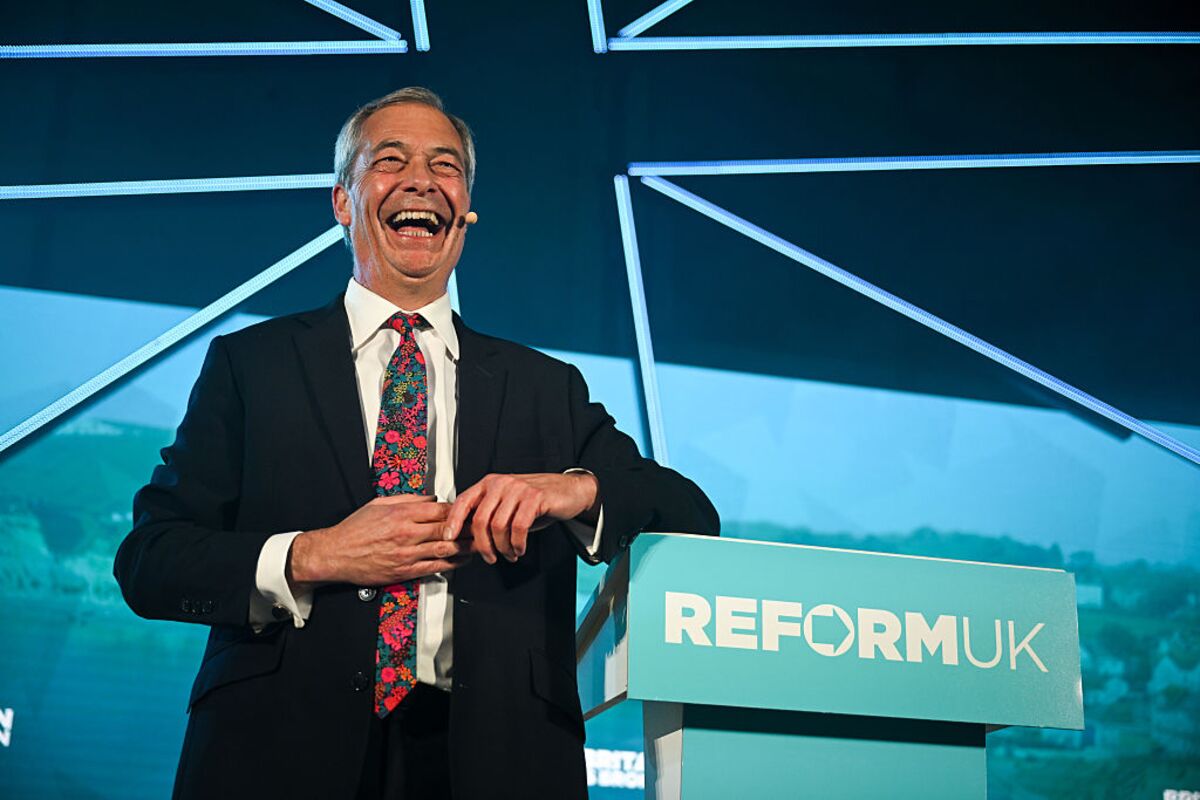
Britain’s political funding landscape is under renewed scrutiny after revelations about a substantial donation to Nigel Farage’s Reform UK. A crypto investor and aviation entrepreneur, reportedly living in Thailand for more than two decades, contributed around £12 million ($16 million) to the party last year. The size of the gift and the donor’s residency status have sparked questions about whether current UK campaign finance rules sufficiently deter outside influence and how the country stacks up against peers in France, Canada, and Ireland.
Context and tilting dynamics
The UK has long prided itself on a robust framework intended to curb the influence of money in politics. Yet critics argue that recent disclosures reveal a grey area where large international or expatriate donations could, intentionally or unintentionally, bypass the spirit of domestic political accountability. While the letter of the law may be complex, the practical effect is straightforward: significant financial backing can shape policy visibility, messaging, and electoral strategy far beyond what many voters anticipate.
What’s at stake
- Transparency and trust: Large, high-profile donations can intensify public concerns about who funds political narratives and policy proposals.
- Policy influence: Wealthy backers may steer campaign priorities, messaging, and coalition-building, impacting governance outcomes.
- Enforcement and oversight: The case underscores potential gaps in monitoring, reporting, and compliance that could invite reforms to tighten contribution limits, residency criteria, and disclosure requirements.
Who is affected
- Voters seeking clearer lines between wealth and policy outcomes.
- Smaller donors and civil society actors advocating for greater transparency.
- Political parties, which rely on fundraising but must balance legitimacy with public accountability.
Economic and regulatory implications
- Domestic regulatory tuning: Lawmakers might explore tightening residency-based contribution rules, clarifying what constitutes a permissible donor, and closing loopholes that allow overseas-based individuals to channel funds into UK campaigns.
- Cross-border comparisons: The controversy invites comparisons with international standards, potentially providing political momentum for UK regulators to recalibrate rules toward parity with peers like France, Canada, or Ireland.
- Market and donor behavior: If donors perceive greater regulatory risk or opacity, there could be a chilling effect on large-scale giving or a push toward more transparent, verifiable funding channels.
Political response and public discourse
- Opposition and reform dynamics: Critics are likely to call for tighter controls and independent oversight, arguing that current rules may inadequately reflect modern political finance realities.
- Party strategy considerations: Reform UK and other major players may respond with fundraising policy proposals, emphasizing transparency, caps, or enhanced reporting to reassure the electorate.
- Media and watchdog role: Increased scrutiny from investigative outlets and civil society groups could press for rapid reforms and clearer enforcement mechanisms.
What comes next
- Legislative proposals: Expect debate around residency definitions, donor disclosure thresholds, and enforcement powers for electoral commissions or equivalent bodies.
- Regulatory clarity: Rulemaking could address ambiguous scenarios—such as expatriate or long-term foreign residents funding domestic political activities.
- Public accountability measures: Strengthened reporting requirements and visible enforcement actions would be central to restoring trust in the process.
Takeaway for a 2026 audience
The episode signals a broader, ongoing pivot in Western democracies: as wealth concentrates and cross-border mobility grows, domestic electoral finance rules must evolve to preserve fairness, transparency, and public confidence. The UK case presents a concrete illustration of why, in an era of global capital and digital finance, governance frameworks must balance openness with robust oversight. Expect policymakers to prioritize clearer donor rules, stronger disclosures, and more rigorous enforcement to prevent any perception that money can disproportionately influence the political field beyond the ordinary citizen.