Key developments
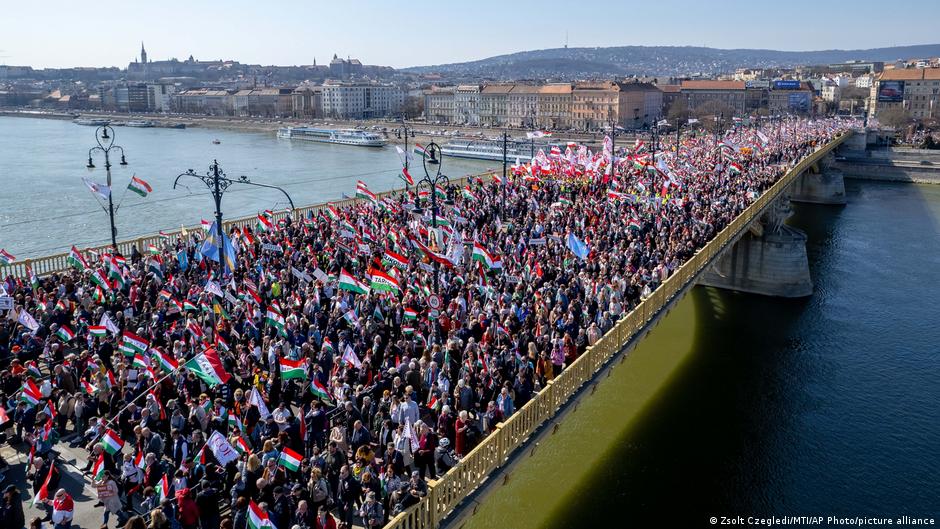
Hungary’s political landscape is witnessing a striking juxtaposition on the eve of a pivotal vote as Prime Minister Viktor Orban faces his first robust challenge in years from rival Peter Magyar. Both leaders used Hungary’s national day celebrations to frame contrasting futures for the country, underscoring a contest not just over policy but over the direction of national governance.
Context and stakes
Orban’s long-dominant political orbit is confronting a challenger who claims a new mandate and a different strategic approach to Hungary’s role in Europe, the economy, and domestic reforms. The national day rallies provided a public laboratory for competing narratives: Orban projecting continuity and tested governance, Magyar pitching change and renewal. The events crystallize a broader question for voters: should Hungary continue on its established path or pivot toward a recalibrated model of leadership and policy?
What the rallies reveal about strategy
- Orban’s message: Emphasizing stability, national sovereignty, and proven governance, Orban’s side frames continuity as a shield against external pressures while highlighting his track record on security, economic management, and European alignment. The emphasis is on experience, predictability, and a tested approach to national interests.
- Magyar’s message: Positioning himself as a reform candidate, Magyar casts himself as a vehicle for renewal and new governance mechanisms. His rhetoric centers on attracting investment, strengthening democratic norms, and recalibrating Hungary’s balance between state direction and market dynamics. The rally signals a bid to reframe policy debates around modernization, transparency, and accountability.
Implications for policy direction
- Governance and reforms: The election presents a clash over how aggressively Hungary should pursue internal reforms, institutional checks and public-sector modernization, and how to balance centralized authority with civil society and media plurality.
- Economic strategy: The campaigns reflect divergent visions for Hungary’s economic trajectory—continuity versus a more dynamic reform agenda intended to bolster competitiveness, investment, and growth while addressing perceived bottlenecks.
- EU and international positioning: Voters will weigh Hungary’s posture toward Europe and regional blocs, with implications for funding, regulatory alignment, and diplomatic priorities.
What comes next
As campaigning intensifies, the electorate will assess which leadership offers a coherent plan to navigate Hungary’s economic pressures, security concerns, and European integration dynamics. The national day rallies have underscored that this vote may redefine Hungary’s governance tone for years to come, not only through policy choices but through the legitimacy and tone of its leadership.
Broader significance
The duel between Orban and Magyar illustrates a broader trend in which established leaders confront challengers advocating renewal—testing whether long-standing governing paradigms can adapt to evolving domestic demands and international realities. For observers, the campaign will be a bellwether for Hungary’s future governance style, institutional balance, and policy pragmatism.