Situation Brief
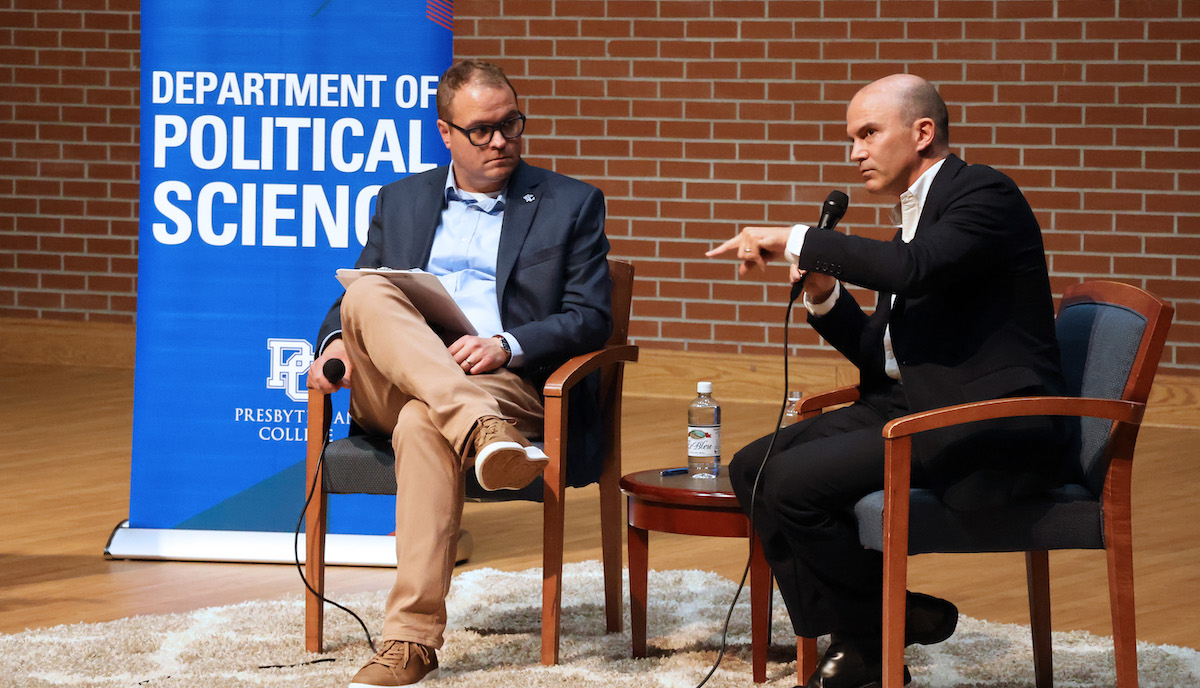
Rising tensions between the United States and Iran are prompting careful reassessment of long-term U.S. strategy in the Middle East. In a keynote address at Presbyterian College, former White House deputy national security adviser Ben Rhodes outlined a nuanced, uncertain trajectory for diplomacy and security in a region where flashpoints can quickly escalate into broader conflict. The remarks come amid a wave of recent U.S. military actions against Iran, which the administration frames as deterrence and response to regional threats. Critics warn that steps taken in the near term could harden positions, complicate negotiations, and affect stability across the region.
Strategic Stakes
The core question facing policymakers is whether the current approach can contain danger without provoking escalation, and whether a durable diplomatic framework can be built amid shifting regional alignments. Rhodes emphasized that long-term stability hinges on credible deterrence paired with strategic diplomacy—balancing pressure with negotiation incentives. The stakes extend beyond Iran itself, influencing Gulf security architectures, alliance dynamics with partners like Israel and Saudi Arabia, and broader U.S. credibility on nonproliferation and human rights commitments.
Impact on U.S. Interests
From an American interests lens, the immediate concern is preventing confrontation from spiraling into a wider conflict that would disrupt global energy markets, intensify civilian harm, and strain U.S. defense resources. Long-term considerations include preserving a credible deterrent, protecting essential trade and security partnerships, and maintaining the option for diplomatic engagement with Tehran. Rhodes’ analysis suggests that a cautious, strategic recalibration may be necessary to avoid an adversarial stalemate and to create space for negotiation that can endure political changes at home.
Global Power Dynamics
The geopolitical terrain surrounding Iran involves a lattice of regional actors, foreign powers, and competing narratives about legitimacy and influence. U.S. policy choices are deeply connected to perceptions of leadership and resilience among allies, as well as Tehran’s calculus about sanctions, sanctions relief, and regional influence. The international community’s response—ranging from sanctions and diplomacy to potential multilateral security arrangements—will shape how the United States can wield influence without triggering unintended consequences, including spillovers into neighboring crises.
Forward-Looking Risks
- Escalation risk: incremental actions could push Iran to respond more aggressively, risking broader conflict in the Gulf.
- Diplomatic paralysis: political constraints in Washington or Tehran could stall negotiations, hardening entrenched positions.
- Alliance strains: key partners may pressure the U.S. for clearer red lines or relief from sanctions, testing the cohesion of allied fronts.
- Economic vulnerability: energy markets and global supply chains could react to disruptions in the Strait of Hormuz or allied oil hubs.
- Domestic political consequences: public opinion and congressional dynamics may constrain or compel a more aggressive or more restrained course of action.
What Comes Next
Analysts argue for a dual-track approach: maintain credible deterrence while pursuing targeted diplomacy that addresses core security concerns, including ballistic missile programs, regional proxies, and limited, verifiable concessions. Confidence-building steps, transparent signaling, and measurable benchmarks could create tangible leverage for future negotiations. In the near term, expect intensified diplomatic outreach, behind-the-scenes discussions with regional partners, and ongoing risk assessment to calibrate U.S. posture in response to Iranian actions and regional developments.
Policy and Governance Takeaways
- Diplomacy as a strategic asset: The ability to blend deterrence with dialogue is central to reducing miscalculation risk.
- Multilateral engagement: Sustained coalitions and international support will be critical to stabilizing the security environment.
- Domestic policy alignment: U.S. political leadership must harmonize national security objectives with economic and human security considerations to avoid mixed signals.
- Strategic patience versus pressure: Policymakers will grapple with timing—when to apply pressure, when to offer incentives, and how to structure concessions that are verifiable and reversible.
Conclusion
As tensions persist, the path to durable stability in the U.S.-Iran equation remains uncertain. The 2026 landscape demands a finely calibrated strategy that preserves U.S. interests, protects regional partners, and leaves room for a credible diplomatic doorway. The long-term question is whether policymakers can translate deterrence into durable diplomacy that reduces risk, preserves regional stability, and maintains global confidence in American leadership.