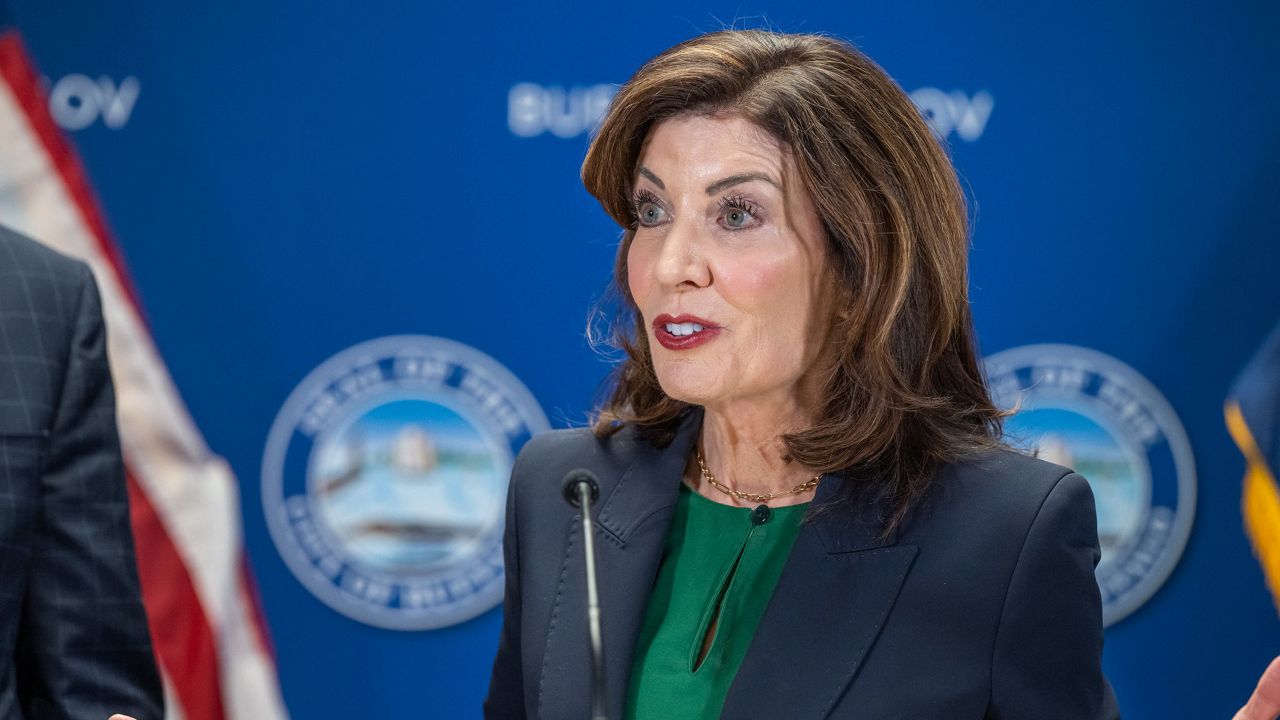
Across the political spectrum, dealings between state leaders and federal policy figures can foreshadow bigger shifts in how immigration and border issues are managed. In Albany, Governor Kathy Hochul hosted a discussion with Trump’s border czar, a meeting that lasted about an hour, according to a Hochul spokesperson. The optics—two high-profile executives who sit at opposite ends of the national policy debate—highlight a broader strategy: statewide administration alongside federal-aligned voices to navigate regulatory and political headwinds surrounding immigration.
Context and what happened
The meeting occurred in a moment when state governments are increasingly forced to grapple with federal immigration dynamics and border policy messaging. Hochul’s office framed the session as a substantive, face-to-face exchange aimed at understanding priorities, sharing perspectives on enforcement and humanitarian considerations, and exploring avenues for coordination where possible. While the specifics of any policy commitments were not disclosed publicly, the exchange signals a willingness to engage with federal voices that advocate for stricter or more centralized border controls.
Public and political signaling
Publicly, the encounter is being read through two lenses. First, it may reflect a pragmatic approach to governance: even in a state known for more liberal immigration stances, leaders recognize the importance of dialogue with federal policymakers to secure resources, align on enforcement standards, and anticipate regulatory shifts that could affect state programs. Second, the meeting feeds into a broader political narrative about federal-state collaboration—or at least dialog—on immigrant processing, asylum adjudication, and border security funding.
Policy implications to watch
- Immigration enforcement vs. humanitarian obligations: The dialogue could inform how New York balances its own policies with federal expectations for enforcement, detainer practices, and the handling of asylum seekers.
- Resource coordination: A key area where state-federal coordination matters is funding for processing, shelter capacity, and local law enforcement collaboration. The meeting may lay groundwork for joint or conditional funding approaches.
- Regulatory alignment: If federal policy goals gain traction, states may adjust administrative processes, reporting requirements, or compliance timelines to align with new federal norms.
- Political leverage and messaging: The encounter also has signaling value, signaling that state leaders are actively engaging with federal policy advocates, potentially shaping public perception and electoral narratives around border security ahead of 2026 electoral cycles.
What this could mean for Albany and beyond
- State governance strategy: Hochul’s openness to meeting with a federal policy specialist suggests a practical governance stance—prioritizing dialogue to manage impacts on New Yorkers, businesses, and immigrant communities. This approach can be a template for other governors navigating similar cross-cutting issues.
- Electoral dynamics: As 2026 approaches, how New York’s leadership frames its stance on immigration and border policy—whether as a safety-first approach, a humanitarian-centered policy, or a call for federal clarity—might influence statewide political contests and party messaging.
- Federal-state relations: The session adds to a growing pattern where states seek to influence or supplement federal policy directions through direct engagement with administration insiders, think-tank voices, or policy practitioners close to decision-makers.
What comes next
- Public communication: Expect follow-up statements clarifying any agreed-upon topics or next steps, though specific policy commitments may remain non-public.
- Operational planning: If there is a push toward closer coordination, state agencies could begin outlining frameworks for information-sharing, joint tasking, or coordinated contingency planning related to border-related flows into New York.
- Monitoring developments: Analysts will watch for any shifts in state-level regulations, funding allocations, or program design that align with or push back against federal policy directions discussed in Albany.
In a political landscape where immigration policy remains a flashpoint, Harlem to Albany dynamics—captured in a one-hour face-to-face meeting between Hochul and Trump’s border czar—underscore a broader trend: governance at the intersection of state pragmatism and federal policy ambition. The coming weeks and months will reveal how this dialogue translates into concrete actions, and what it signals about strategy, leverage, and governance architecture as the 2026 landscape takes shape.