Situation Brief
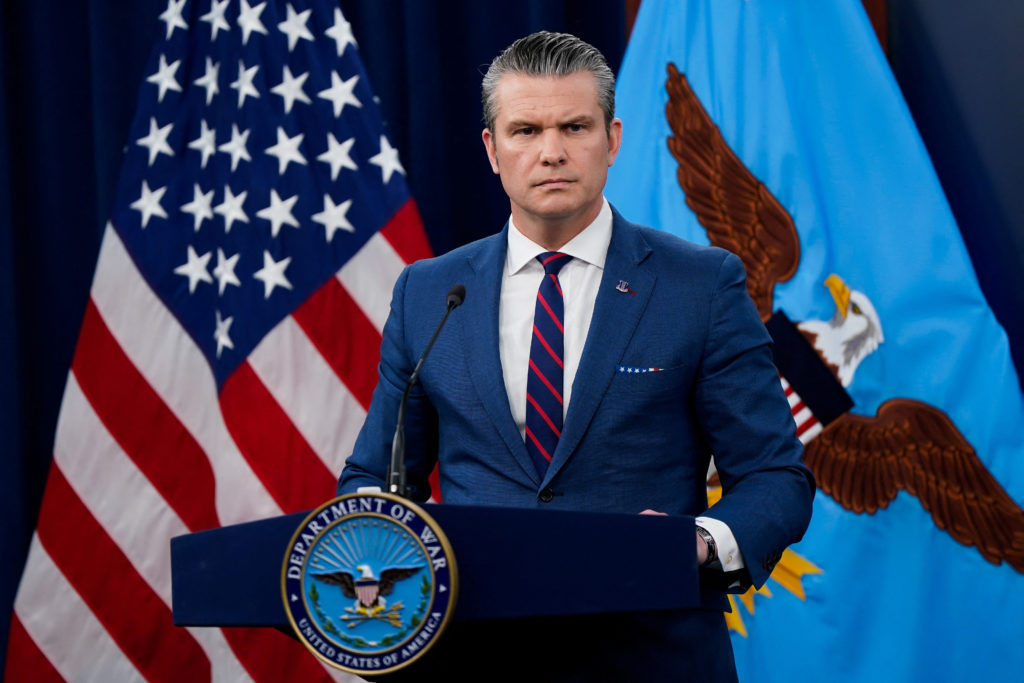
The public discourse around U.S. military engagements often hinges on how the human cost is portrayed. Recent comments by Defense Secretary Pete Hegseth accusing the American press of emphasizing casualties in the Iran conflict to “make the president look bad” have reignited a longstanding tension: the media’s role in shaping the perceived seriousness of war versus the government’s need to maintain public support and political legitimacy. While presidents rely on public opinion to sustain strategic choices, news coverage that foregrounds casualties can complicate decision-making and raise questions about transparency, accountability, and the long-term viability of military campaigns.
Strategic Stakes
The exchange underscores a critical dynamic in national security governance: messaging consistency between war aims, risk assessment, and the public narrative. If the administration and defense leadership perceive media emphasis on casualties as a political tactic rather than a vigilance mechanism, they may push for greater emphasis on domestic resilience, risk communication, and clearer thresholds for declaring or de-escalating hostilities. Conversely, critics argue that downplaying human costs risks eroding public trust, undermining informed consent for sustained military commitments, and neglecting the moral and strategic dimensions of war.
Impact on US Interests
Media framing of casualties can influence legislative attention, budget allocations, and oversight priorities. Lawmakers may demand more transparent casualty reporting, more rigorous estimates of civilian impact, and clearer exit strategies. Policymakers could also face pressure to recalibrate alliance signaling, diplomatic engagement, and risk mitigation to avoid protracted conflicts with unclear strategic outcomes. In the Iran context, audiences are watching for how the administration communicates goals, proportionality, proportional risk to American service members, and the potential for escalation or de-escalation pathways.
Public & Political Reactions
Expect a spectrum of reactions across political lines. Some legislators and defense commentators will push for sharper data on casualties and more explicit political accountability for strategic choices. Others will defend the necessity of protecting national morale and ensuring the public supports critical, ongoing operations. The media’s role will likely come under heightened scrutiny—whether outlets should prioritize raw casualty counts, context about mission objectives, or analysis of risk-reward tradeoffs. The broader public may respond with renewed skepticism about war costs, influencing upcoming electoral considerations and defense policy debates.
What Comes Next
- Increased demand for transparent casualty and risk reporting from the Pentagon and the administration.
- Greater focus on explainers that connect casualty figures to strategic objectives, exit ramps, and alliance commitments.
- Potential shifts in how the White House and Defense Department frame future operations to balance operational security with democratic accountability.
- Debates over the appropriate level of public detail about military losses, including civilian harm, and how to present those figures in a way that informs without sensationalizing.
Policy Snapshot
This moment sits at the intersection of wartime messaging, congressional oversight, and public accountability. Policymakers may explore:
- Strengthened casualty reporting standards and independent verification to bolster trust.
- Clear public rationales for ongoing hostilities, including defined milestones and exit strategies.
- Enhanced risk assessment publicly shared with lawmakers and the public to facilitate informed consent for continued engagement.
Who Is Affected
- Service members and families, who bear the direct human costs of conflict.
- Civilians in conflict zones, whose safety and livelihoods hinge on military outcomes and humanitarian considerations.
- Veterans and veterans’ advocacy groups, who seek transparency about long-term consequences and cost.
- Policymakers and oversight bodies, facing heightened scrutiny over strategy, budget, and accountability.
- The broader electorate, whose views shape elections, defense budgets, and foreign policy direction.
Tone and Style
The article adopts a policy-forward, analytical tone aimed at discerning strategy, governance implications, and accountability mechanisms. It avoids sensationalism, emphasizes evidence-based discussion, and presents diverse perspectives to help readers understand the trade-offs inherent in wartime messaging.
Context for 2026 Audiences
In a year marked by complex foreign engagements and heightened political polarization, how the media frames human costs becomes a lever for policy debate and electoral messaging. The Hegseth remark—whether interpreted as a critique of press practices or a broader argument about public tolerance for war costs—highlights the ongoing challenge of balancing transparent, accountable governance with national security imperatives in the information age. The resulting policy and political trajectories will influence defense budgeting, congressional oversight, and the calculus of future U.S. military interventions.