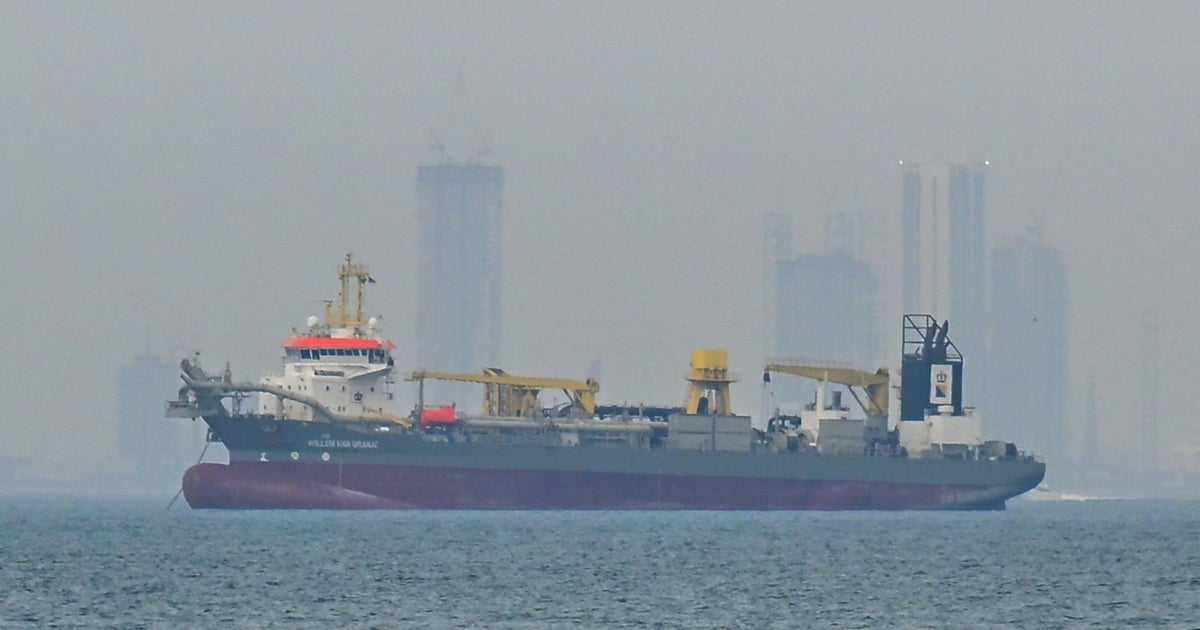
Situation Brief
During the current political cycle, former President Trump asserted the existence or imminent creation of a government-backed agency tasked with insuring commercial ships operating in the Persian Gulf. The claim has sparked rapid scrutiny from lawmakers, defense analysts, and industry stakeholders who question its feasibility, funding, and strategic rationale. While the specific mechanism remains unverified by independent sources, the discussion highlights perennial debates over maritime security, energy chokepoints, and the U.S. role in protecting global commerce.
This analysis dissects what such an agency would mean in practice, the policy rationales cited by supporters, the constitutional and regulatory hurdles, and the potential ripple effects on markets, allies, and geopolitical risk.
Strategic Stakes
The Persian Gulf corridor carries a substantial share of the world’s energy and trade. A U.S.-backed insurance facility could be framed as a complement to naval deterrence, aiming to reduce insurance costs for shippers and increase resilience against disruptions. Proponents argue that providing predictable, government-backed coverage would deter state and non-state actors seeking to disrupt traffic through the Strait of Hormuz and adjacent chokepoints. Critics, however, warn of market distortions, moral hazard, and the risk of drawing the United States deeper into a region with volatile alliances and complex legal regimes.
Key questions include:
- How would underwriting be structured? Would it be a direct government program, a government-backed reinsurance facility, or a public-private partnership?
- What would be the cost to taxpayers, and how would pricing be risk-adjusted for high-threat routes?
- How would this interact with existing international insurance markets and sanctions regimes?
- What governance and oversight mechanisms would ensure accountability and prevent fraud or overreach?
Impact on US Interests
If viable, such an agency could affect several pillars of U.S. interests:
- Energy security: By stabilizing insurance markets, it could support continued crude and LNG shipments from Gulf producers, potentially reducing supply bottlenecks and price volatility.
- Alliance signaling: A government-supported program might reassure partners who fear a vacuum in maritime security and reinforce the perception of U.S. commitment to global commerce.
- Market dynamics: Insurance is a critical cost component for shipping; shifting risk to a government entity could alter premiums, underwriting standards, and risk pricing across the broader insurance industry.
- Geopolitical signaling: The move would send a clear message about American willingness to assume greater risk in hot spots, potentially influencing adversaries’ calculations.
Policy and Regulatory Considerations
Implementing a real program would require navigating:
- Constitutional authority and funding: Establishing a new federal insurer would need appropriation, statutory authorization, and careful separation of powers considerations.
- International law and private sector roles: The insurance market in maritime trade is global and highly regulated; any government role would need to respect international insurance norms and existing port-state control mechanisms.
- Civil-military balance: The program’s design would have to avoid overlapping with active military operations and ensure it remains anchored in civilian, regulatory risk management.
- Oversight and accountability: Congressional committees, inspectors general, and independent audits would be expected to monitor solvency, pricing fairness, and conflict-of-interest safeguards.
Electoral and Political Dynamics
This topic sits at the intersection of national security, energy policy, and lender-risk management. If framed as a pragmatic step to stabilize critical supply chains, it could appeal to voters prioritizing economic resilience and energy stability. Critics are likely to frame it as an overreach that could entangle the government in private market dynamics or escalate tensions with rival states.
What This Means Moving Forward
- Clarity from the administration and congressional leaders is essential. A detailed policy white paper, outlining governance, funding, risk models, and sunset provisions, would help lawmakers and markets assess feasibility.
- Market participants will watch for signals about private-sector involvement, regulatory relief, and potential capex or reinsurance schemes.
- Allies in Europe and Asia will evaluate whether such a program would complement or complicate existing regional security architectures, including ship protection arrangements and sanctions enforcement.
- The broader debate will likely hinge on cost-benefit analyses: Do the security and economic benefits outweigh the fiscal exposure and potential market distortions?
Public & Party Reactions
Public commentary ranges from cautious optimism about reducing shipping risk to skepticism about government micro-management of private insurance markets. Within political circles, proponents may highlight the move as a concrete demonstration of commitment to securing global trade routes, while opponents may emphasize budgetary risk, potential for mission creep, and the need for multilateral coordination rather than unilateral action.
What This Means for 2026
As campaign dynamics unfold, positions on maritime security, energy policy, and federal risk-bearing will influence voter perceptions of leadership and competence. A clear, data-driven framework—detailing risk assessment, costs, and oversight—will be critical to converting political talking points into tangible policy viability.
In short, the proposition of a government-backed agency insuring ships in the Persian Gulf encapsulates a high-stakes trade-off: bolstering global commerce and strategic signaling versus fiscal risk, regulatory complexity, and international diplomacy challenges. The coming weeks will determine whether this concept evolves into a formal policy proposal, a partisan talking point, or a muted speculation shaped by broader debates over U.S. leadership in a shifting geopolitical order.