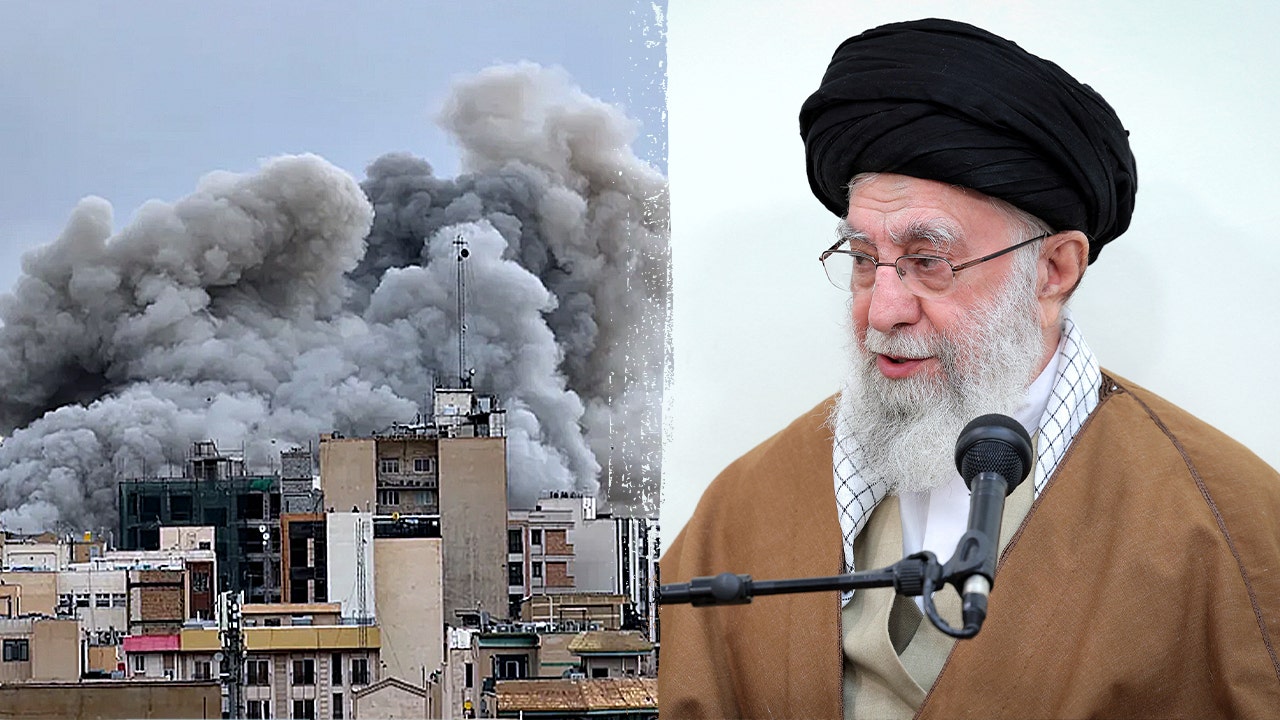
Situation Brief
Recent statements from former President Donald Trump claim that U.S. military action destroyed Iran’s “leadership succession bench,” a phrase referring to the group within the Iranian regime tasked with selecting the next supreme leader or top decision-makers. The report comes amid ongoing tensions between Washington and Tehran, set against a broader geopolitical contest over influence in the Middle East. While U.S. officials have not publicly corroborated the claim in detail, the assertion underscores a high-stakes moment for Iran’s internal power dynamics and the stability of its leadership apparatus.
Strategic Stakes
Iran’s leadership transition has traditionally been a tightly managed process with multiple intra-regime checks and a cascade of clerical and military players. If the leadership succession bench has been compromised or decimated, the Islamic Republic could experience transitional uncertainty, factional infighting, or a recalibration of security priorities. Such turbulence could ripple into Iran’s foreign policy posture, its regional alliances, and decision-making on sensitive issues such as nuclear progress, cyber operations, and regional proxies.
Impact on US Interests
For the United States, the potential disarray inside Iran’s ruling circles could affect both diplomatic leverage and risk calculations in the region. A leadership vacuum or rapid reallocation of power centers may alter Iran’s willingness to engage in negotiations, enforce red lines on enrichment, or coordinate with allied actors such as Russia and China. Washington could see brief openings for diplomacy or, conversely, a more aggressive posture if leadership uncertainty leads to miscalculation or escalation in hostile actions.
Global Power Dynamics
Iran’s leadership changes unfold within a multipolar framework where major powers vie for influence in the Middle East. Any perceived weakness could invite rival actors to press their own agendas, potentially accelerating regional realignments. The United States must weigh how a shifting Iranian power dynamic interacts with ongoing efforts to deter ballistic missile development, counter illicit finance networks, and maintain freedom of navigation in key waterways.
Forward-Looking Risks
- Internal power fragmentation: Competing factions may vie for control, leading to erratic messaging or policy shifts that complicate regional security planning.
- External leverage opportunities: The United States and allied countries could exploit perceived weaknesses to push for concessions on adversarial behaviors or to advance a diplomatic framework for long-term engagement.
- Escalation potential: If leadership contention triggers misinterpretations of Western intent, there is a non-trivial risk of retaliatory actions against U.S. interests or allies in the region.
- Nuclear and security posture: Uncertainty about leadership continuity could influence Iran’s strategic calculus regarding enrichment activities and ballistic missile programs.
What This Means Moving Forward
Analysts should monitor indicators of internal Iranian cohesion: unified public messaging from top officials, consistency in policy signals, and the speed with which new leadership contingents consolidate authority. For policymakers in Washington and allied capitals, the central question is whether this moment offers a doorway for renewed diplomacy or signals a harder line is required to deter destabilizing actions. In the near term, expect a flurry of behind-the-scenes diplomacy, media narratives that emphasize regime weakness, and strategic recalibrations in regional theaters where Iran maintains influence.
Public & Party Reactions
Political actors in the United States are likely to interpret these developments through a lens of national security, deterrence, and alliance management. Supporters may frame the report as evidence of U.S. effectiveness against adversaries, while critics may call for careful verification and warn against overreliance on singular events as indicators of long-term power shifts. Within Iran, state media and security institutions are expected to manage the narrative to minimize perceived vulnerabilities while signaling continuity to domestic audiences.
What This Means for Governance and Policy
- For U.S. policy, the episode highlights the importance of calibrated diplomacy that avoids inflaming escalation while preserving leverage to push for nonproliferation and regional stability.
- For Iran, leadership ambiguity could prompt rapid rehearsals of succession protocols, potential purges, or realignments with core factions in the clerical establishment, the Revolutionary Guard, and intelligence services.
- For regional governance, allied states should prepare for a period of strategic uncertainty in Iran’s posture toward neighboring countries, energy markets, and security alignments.
Context for Readers
This analysis situates a controversial claim—about striking at Iran’s leadership succession bench—within the larger framework of U.S.-Iran relations and Middle East geopolitics. It’s essential to distinguish rhetoric from verifiable outcomes and to watch how any leadership transition influences Iran’s compliance with international norms and its approach to regional stability.
Immediate Watchpoints
- Verification of leadership changes within Iran’s governance structure by independent monitoring groups.
- Shifts in Iran’s public messaging and policy actions in the weeks following the reported strike.
- Reactions from regional partners and international institutions regarding Iran’s strategic posture and negotiations on security and nonproliferation topics.