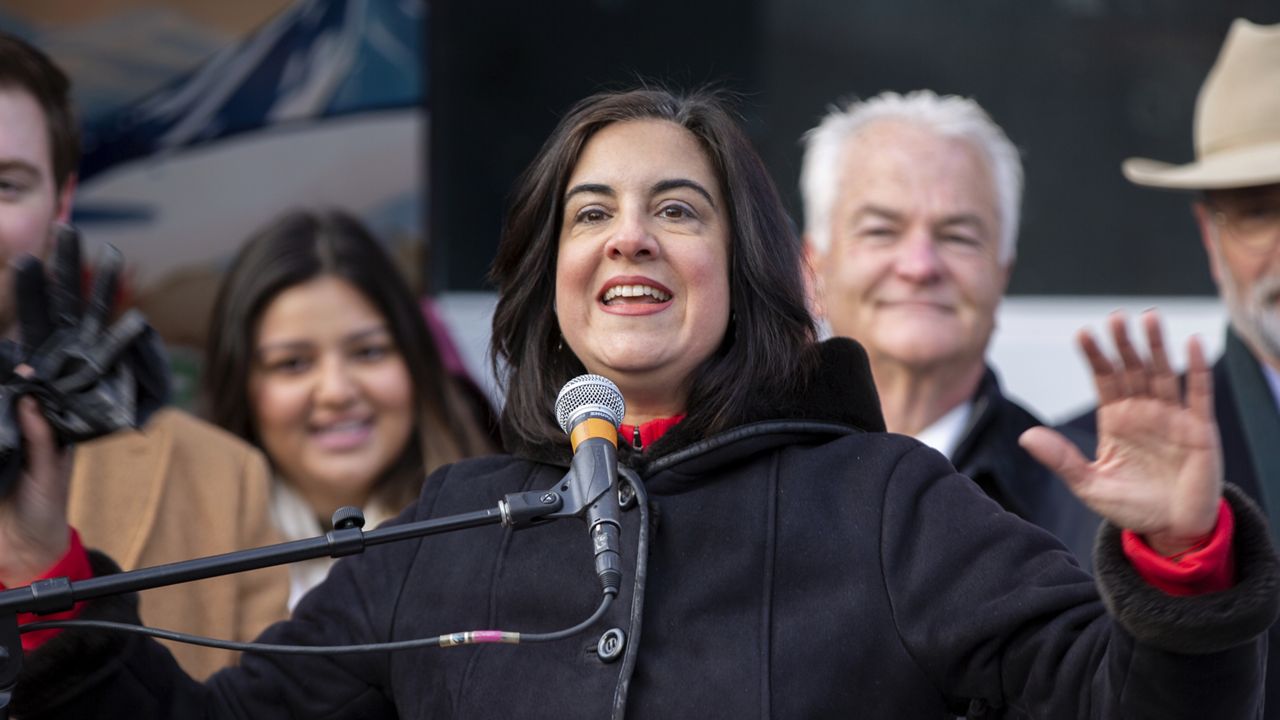
A terse legal pause has reshaped the early politics of New York’s 2026 congressional landscape. The Supreme Court stopped a state court’s directive that would have forced a redraw of a Republican-held district currently represented by Nicole Malliotakis. The decision preserves the status quo for now, at least on one of the state’s most closely watched redistricting fights. In an environment where district maps can tilt political power for a decade, the halt injects strategic uncertainty into candidates’ 2026 plans and party messaging.
What Just Happened
– The timing matters: a state court previously ordered redrawing the district to rectify potential gerrymandering or misalignment with population shifts. The Supreme Court’s intervention means the court-ordered redraw will not proceed immediately.
– Malliotakis’ district remains in its current configuration pending further legal developments. The move represents a tactical breathing space for the incumbent and her party, as opponents may reassess their strategies in a map that could still shift under ongoing litigation.
– The decision underscores the ongoing friction between state courts, commissions, and the federal judiciary in how electoral maps are drawn and who controls the ultimate line-drawing power.
Electoral Implications for 2026
– Incumbent advantage preserved in the near term: By delaying the redraw, Malliotakis benefits from map stability as she targets voters with a defined base, potentially reducing disruption to her campaign infrastructure.
– Opponent planning is unsettled: Opponents seeking more favorable lines will need to adjust timelines and resources, possibly leveraging court rulings or legislative actions in the coming months.
– Broader map integrity questions: The case signals continued contest over how districts align with population changes and party demographics, with implications beyond a single seat.
Public & Party Reactions
– Republican constituencies may frame this as a win for map stability and incumbency protection, reinforcing messages about predictable elections and orderly governance.
– Democratic groups and reform advocates could view the pause as a temporary setback to efforts aimed at redistricting reform, while preparing to mobilize around future court decisions.
– Allies and opponents will likely watch the legal process closely, including potential appeals or new districting proposals once the courts set a timeline.
What This Means Moving Forward
– Legal trajectory remains fluid: The core questions—whether the district needs redrawing, and who should oversee the process—are unsettled. Future rulings could reinitiate or derail the redraw depending on judicial interpretations and procedural rulings.
– Map integrity vs. reform ambitions: The case highlights the enduring tension between maintaining stable electoral maps and pursuing reforms meant to reflect shifting populations and partisan fairness.
– 2026 campaign planning implications: Candidates and committees should prepare for both scenarios—short-term map stability and potential retroactive redraws—adjusting voter outreach, fundraising, and GOTV strategies accordingly.
Context and Analysis
This development sits at the intersection of judicial process and electoral strategy. Redistricting debates in New York have long been a focal point for debates over fairness, transparency, and political influence. The Supreme Court’s step to pause the state court’s redraw directive reflects the broader willingness of courts to influence (and sometimes pause) how districts are engineered ahead of major elections. For campaigns, this means staying nimble—ready to recalibrate messaging and field operations if maps change, while leveraging the current stability to consolidate support as litigation continues.
Forward-Looking Risks
– Potential for renewed redrawing attempts: If subsequent rulings order a redraw, campaigns could face a sudden reshaping of constituent boundaries, requiring rapid shifts in outreach and resource allocation.
– Political backlash around court interventions: The involvement of higher courts in district boundaries may intensify debates about judicial overreach or the legitimacy of the map-drawing process.
– Voter engagement around process transparency: As residents watch maps evolve, there is risk of fatigue or mistrust unless reforms accompany clearer, accessible explanations of how lines are drawn and adjusted.
Key Takeaway
The Supreme Court’s halt on the redrawing order keeps Malliotakis’ district intact for now, injecting a strategic pause into the 2026 electoral calculus. The case remains a bellwether for how aggressively courts and commissions will shape congressional maps in the years ahead, with broad implications for party strategy, governance, and voter engagement across New York.