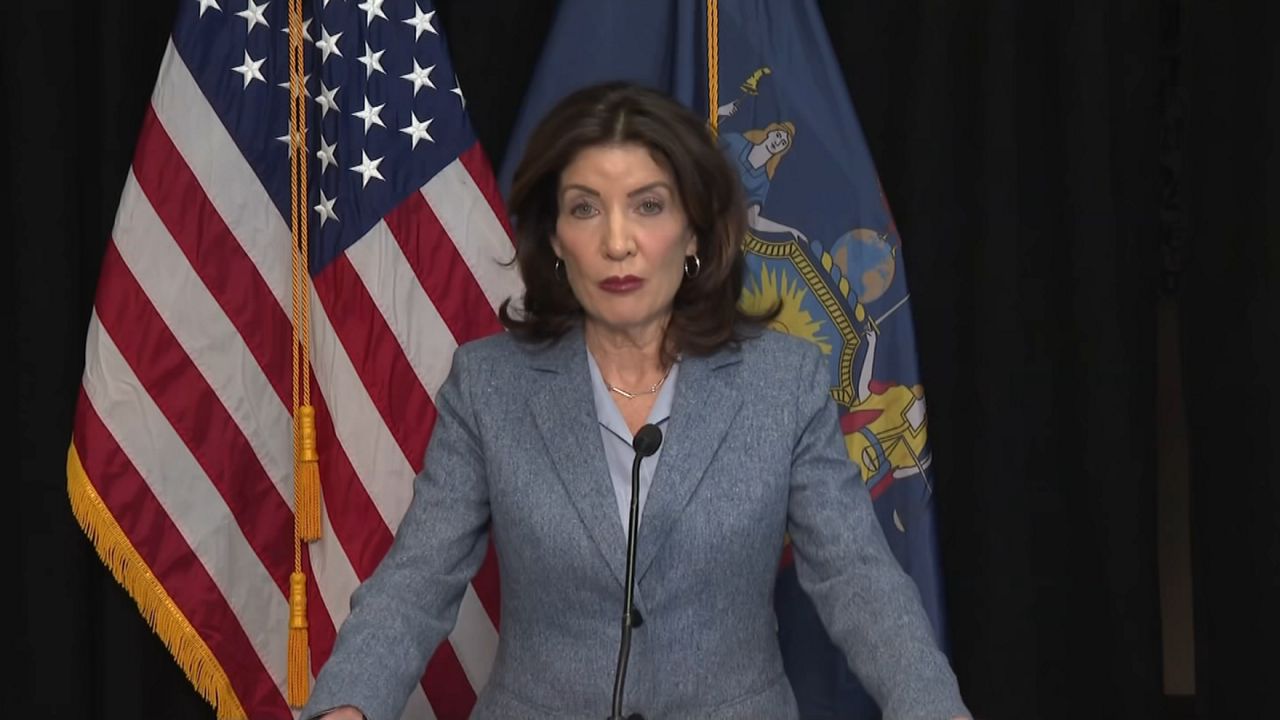
New York leaders are signaling heightened vigilance in response to recent airstrikes conducted by the United States and Israel against Iran. Governor Kathy Hochul described the state as being in a “high state of alert,” framing the incident as not only a foreign policy development but also a domestic governance concern. The messaging underscores a preparedness posture intended to reassure residents while signaling readiness to coordinate with federal authorities on security and crisis response.
Strategic Stakes
The rapid escalation from limited military strikes to sustained warnings carries significant implications for state leadership. In New York, a state with a large, diverse population and dense urban centers, officials must balance civil liberties with public safety responsibilities. The declaration of heightened alert can influence resource allocations, emergency planning, and law-enforcement readiness. It also refracts into the political arena, where lawmakers and candidates will weigh national-security concerns against domestic priorities like economic resilience, housing, and public health preparedness.
Impact on US Interests
For federal-state coordination, the announcement spotlights the critical role state governments play in national security ecosystems. While foreign policy remains the purview of the executive branch, governors communicate risk levels to residents and businesses, potentially shaping public perception of geopolitical stability. The New York response could affect how other states calibrate their own alert levels, influencing broader national risk signaling during a period of tense geopolitical dynamics.
Global Power Dynamics
The incident sits within a broader contest over Middle East security, deterrence strategies, and alliance commitments. U.S.-Israel actions against Iran escalate regional risk profiles and ripple through international markets, energy supplies, and diplomatic channels. In a 2026 political environment, such moves heighten scrutiny of how much risk is acceptable for national security gains versus economic and diplomatic costs. New York’s leadership framing contributes to the domestic narrative around America’s global posture.
Forward-Looking Risks
– Domestic political fallout: Public reactions could range from heightened anxiety to demand for clearer exit strategies or diplomacy-led solutions, influencing gubernatorial and legislative campaigns.
– Economic stability: Markets and supply chains could respond to perceived escalation, impacting energy prices, inflation expectations, and business confidence in New York and beyond.
– Regulatory and civil-liberties considerations: Security measures may prompt debates about monitoring, privacy protections, and civil rights in the context of heightened threat levels.
– 2026 political resonance: The administration’s handling of a high-alert environment will be juxtaposed against candidate platforms on national security, foreign policy experience, and crisis management.
What This Means Moving Forward
– Messaging discipline will be essential. New York officials will likely emphasize continuity of services, resilience, and federal-state coordination to prevent overreach or panic.
– Policy conversations could broaden to include state-level preparedness funding, cybersecurity readiness, and resilience to potential supply-disruption scenarios.
– The political discourse may hinge on whether leaders articulate a clear strategy that couples deterrence with diplomacy, and whether they propose concrete plans to protect critical infrastructure and communities.
– For voters, the central questions will be about competence in crisis management, clarity of information, and how contemporary foreign policy developments translate into tangible benefits or risks at the state level.
Public & Party Reactions
Expect a spectrum of responses from lawmakers and party analysts:
– Conservative and security-focused voices may push for stronger precautionary measures, funding, and law-enforcement authorities to protect mass gatherings and critical sites.
– Progressive and civil-liberties-oriented voices may demand transparency, oversight, and timelier communication about risk assessments and rights protections.
– In the 2026 political landscape, gubernatorial candidates could foreground their governance experience in crisis management, contrasting economic stewardship with national-security stances.
What This Means for New York and the 2026 Landscape
The Hochul administration’s framing of a “high state of alert” signals a practical, display-ready approach to global events that directly touch residents’ daily lives. As the 2026 cycle unfolds, state leadership will be judged on how well they balance vigilance with reassurance, how they collaborate with federal partners, and how they translate abstract geopolitical risk into concrete, relatable protections for communities, workers, and businesses. The incident thus becomes a bellwether for how New York positions itself in a volatile international order while navigating the domestic policy and electoral dynamics of a pivotal state.