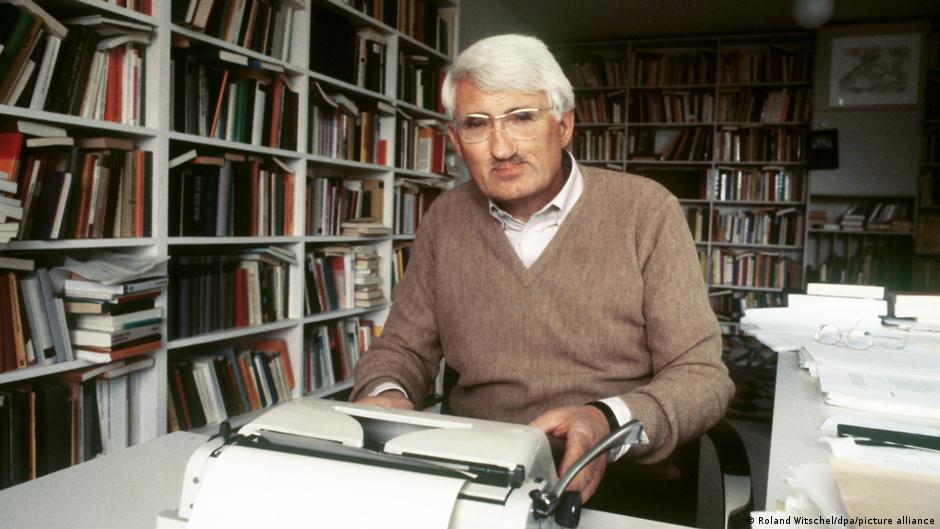
Original news: <div><img src="https://ift.tt/h8jyGJC" style="width: 100%;" /><div>One of Germany’s most influential and important voices has fallen silent: Jürgen Habermas has died at the age of 96.</div></div>
SEO Title: The Habermas Legacy and its Impact on Post-War Political Discourse
Primary Keyword: Habermas legacy
Secondary Keywords: democratic theory, public sphere, political discourse reform
Meta Description: Analyzing Jürgen Habermas’s influence on post-war German politics, his theories of the public sphere and deliberative democracy, and what his passing means for contemporary political discourse in the US and Europe.
Article Content:
Situation Brief
Jürgen Habermas, the towering German philosopher whose work helped redefine democratic theory after World War II, has passed away at 96. His scholarship bridged philosophy, sociology, and political science, shaping debates about how citizens deliberate, how public opinion forms, and how legitimacy is earned in modern democracies. While not a contemporary policy architect in a government office, Habermas’s ideas have quietly steered political discourse in the Federal Republic and beyond, influencing academic curricula, public journalism, and policy debates across Europe and North America.
Strategic Stakes
Habermas’s most enduring contribution is his concept of the public sphere—a space where citizens come together to debate matters of common concern free from coercion and domination. In practice, his framework has justified and invigorated deliberative democracy as a model for citizen participation, media responsibility, and institutional legitimacy. As political actors grapple with misinformation, polarization, and declining trust in institutions, Habermas’s insistence on reasoned discourse and inclusive debate offers a compass for reformers seeking more legitimate policymaking processes.
Impact on Democratic Theory and Public Discourse
- Deliberative Democracy: Habermas argued that legitimacy derives from processes of open, reasoned discourse. This has influenced reforms aimed at improving deliberation in legislatures, local councils, and civic forums.
- Public Sphere and Media: He highlighted the media’s role in enabling or constraining public discussion. His ideas underscore calls for independent journalism, transparent communication, and safeguards against strategic manipulation of information.
- Constitutional and Ethical Foundations: Habermas’s work intersects with constitutional theory, human rights, and the rule of law, reinforcing the idea that political legitimacy depends on inclusive dialogue and respectful disagreement.
What Comes Next for Policymaking and Civic Life
- Deliberation-Driven Reform: Legislatures and agencies may increasingly adopt structured public consultations, participatory budgeting, and advisory mechanisms designed to elevate reasoned debate over partisan theater.
- Media Responsibility: The Habermasian lens encourages stronger standards for public accountability, editorial transparency, and diverse voices in policymaking conversations.
- Education and Civic Literacy: Universities and think tanks are likely to emphasize critical thinking, media literacy, and democratic pedagogy to cultivate citizens capable of informed debate.
Immediate Reactions
Scholars, policymakers, and public intellectuals are reflecting on Habermas’s lasting imprint as a force shaping how democracies talk to themselves. In an era of rapid information flows, his insistence on rational discourse and inclusive participation resonates with debates about how to rebuild trust and legitimacy in institutions.
Policy and Governance Signals
- Governance Reform: The legacy points toward governance models that favor transparent deliberation, stakeholder engagement, and checks against performative politics.
- Regulation of Public Communication: Debates about how to regulate misinformation, promote credible information ecosystems, and protect the integrity of public discourse find renewed relevance in Habermas’s framework.
Long-Term Significance
Habermas’s work endures in the ongoing project to strengthen the quality of democratic deliberation. His theories offer a diagnostic tool for assessing when public discourse is robust or eroded by fragmentation. As democracies confront new challenges—from tech-driven polarization to evolving constitutional norms—the Habermas legacy provides a reference point for pursuing legitimacy through inclusive, reasoned, and participatory policymaking.
What to Watch
- Shifts in civic participation and public consultation practices across Germany and Europe, and their spillover effects on transatlantic governance models.
- The role of media ecosystems in enabling or constraining deliberative processes.
- Educational initiatives aimed at rebuilding citizen competence in evaluating public arguments and evidence.
In Memoriam and Reflection
Habermas’s influence extends beyond academia into the daily rhythms of political life: how parties argue, how media frames issues, and how citizens engage with policy. His work remains a lens through which contemporary democracies can examine the health of their public discourse and the pathways by which legitimate decisions emerge from informed, collective reason.