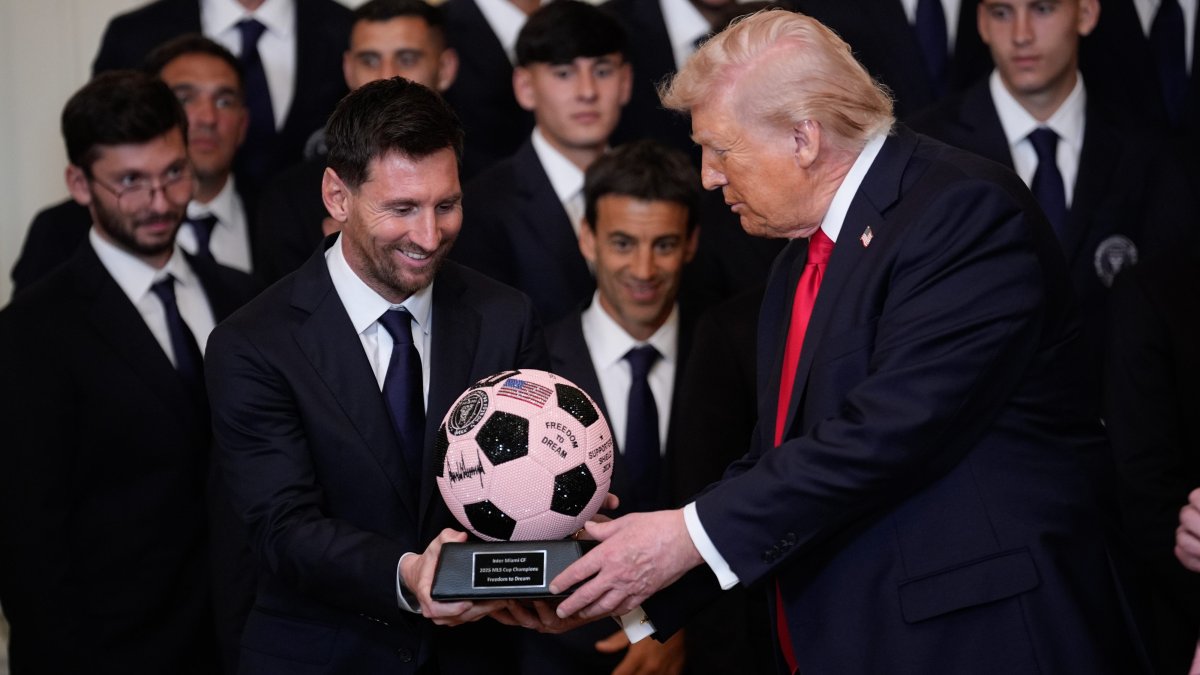
Situation Brief
A recent high-profile appearance by soccer megastar Lionel Messi at the White House has sparked renewed discussion about the intersection of sports, diplomacy, and politics in the United States. While Messi has long kept his public statements on political matters relatively quiet, the optics of his visit to a presidential setting—especially one associated with a controversial political figure—have led observers to question whether this marks a shift in his public stance or is simply a display of sports diplomacy. The moment has quickly become a touchpoint for broader debates about how non-political figures navigate politically charged spaces in an era of explicit partisan rhetoric.
Regional Context
Sports icons frequently cross political lines to symbolize unity, humanitarian concerns, or international collaboration. In the United States, such appearances carry amplified significance because of the country’s highly polarized public square and the strategic use of soft power in diplomacy. Messi’s willingness to engage in a ceremonial setting tied to national leadership can be read as an effort to emphasize universal themes—achievement, resilience, and cross-border cultural exchange—without committing to a domestic political agenda. Yet the venue and company inevitably invite scrutiny about alignment, messaging, and potential implications for fans, sponsors, and national discourse.
US Strategic Signals
- Diplomacy through sports: The visit underscores how major athletes can function as informal ambassadors, shaping perceptions of U.S. openness to global talent and soft power influence.
- Political signaling: Even without outspoken commentary, the choice of venue and company sends a message about perceived legitimacy and inclusivity in international sports as a bridge across political divides.
- Biden Administration and broader geopolitics: While not a policy rollout, the appearance intersects with ongoing debates about how the U.S. engages with global leagues, asylum and visa considerations for athletes, and the role of celebrity endorsements in public diplomacy.
What Just Happened
Messi’s appearance appeared as a carefully choreographed moment designed to highlight unity and cross-cultural exchange. Observers noted the lack of public political statements from the player himself, reinforcing the interpretation that this was about symbolism rather than policy advocacy. However, in today’s climate, even neutral or symbolic acts can become proxies for larger political conversations—ranging from the boundaries of celebrity influence to the optics of U.S. leadership on the world stage.
Public & Political Reactions
Reactions have been mixed and highly contextual:
- Supporters emphasize the positive impact of sports diplomacy, arguing that such moments can soften geopolitical tensions and inspire bipartisan admiration for international achievement.
- Critics express concern that appearances at politically charged venues may appear to normalize or downplay domestic political divisions, potentially politicizing sports for audiences who prefer apolitical fandom.
- Media and policy analysts debate whether non-partisan gestures by high-profile athletes can translate into tangible policy shifts, or if they risk becoming distractors from substantive governance issues.
Policy and Regulatory Implications
While this event is not a policy announcement, it raises questions about:
- The role of sports diplomacy in U.S. foreign policy strategy and how it complements official channels.
- The potential for increased foreign athlete engagement in U.S. events, and what that could mean for visa policy and domestic sporting ecosystems.
- The broader societal impact, including how fans interpret celebrity involvement in political narratives and the risk of deepening partisan polarization through symbolic moments.
What Comes Next
As 2026 politics unfold, such appearances will likely continue to be parsed for implied messages about U.S. openness to talent, international collaboration, and the boundaries of political neutrality in the public sphere. Policymakers and analysts may watch for follow-up actions—whether in sport-related diplomacy initiatives, visa policies affecting athletes, or public statements by Messi or his representatives—that could translate symbolic engagement into tangible policy or diplomatic outcomes.
Bottom Line
Messi’s White House moment is less about a bold political stance and more about the evolving role of global sports icons in shaping political dialogue. It signals a nuanced form of soft power where the optics of unity and cross-border culture can influence perceptions of American leadership, even in the absence of explicit policy positions. For U.S. audiences, the episode reinforces the ongoing tension between celebrity-driven diplomacy and concrete governance, reminding policymakers to consider how symbolic acts intersect with public expectations and international perception.