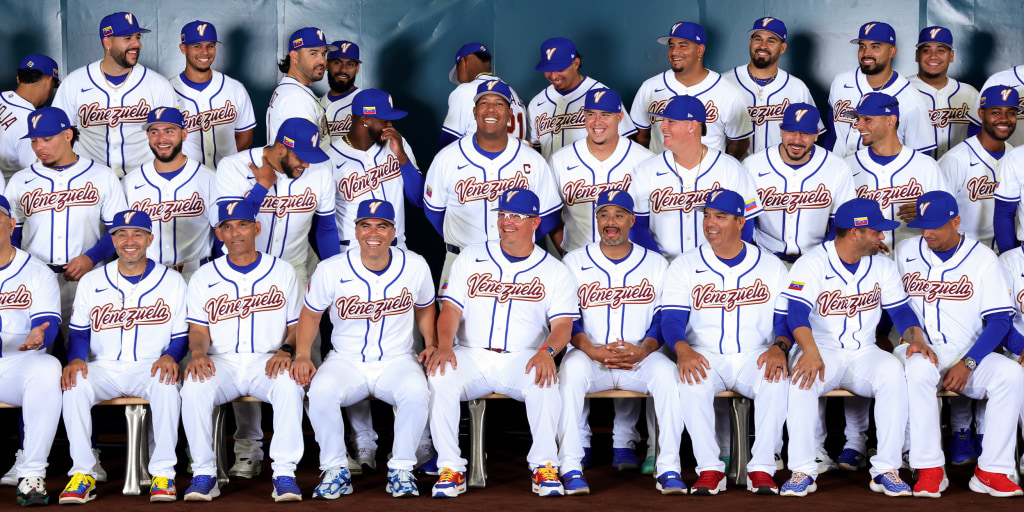
Latin America is watching a paradox unfold: a political moment that could shift regional stability while Venezuelan athletes sprint toward the World Baseball Classic (WBC). In a country defined for decades by political volatility, the current discourse around leadership and governance often collides with the national passion for baseball. The Venezuela squad’s stance—focusing on a tournament that captivates fans across the hemisphere—highlights how sports can function as a unifying force even when domestic politics are dividing lines.
Situation overview
Venezuela’s political uncertainty has centered on leadership dynamics at the very top of the state. While the national agenda remains unsettled, the national baseball team has signaled that the pursuit of victory in the WBC is an apolitical objective. Coaches and players have publicly asserted that political events at the pinnacle of power will not derail their preparation or competitive focus. This framing is notable: it reframes a moment of potential political disruption as a test of national resilience and continuity through sport.
Regional context and strategic signals
Latin America’s relationship with the United States is filtered through a mix of diplomacy, economic ties, and cultural exchange. When internal leadership questions arise, sports occasionally serve as a soft-power channel for regional messaging. Venezuela’s stance—prioritizing performance on the field—stresses a traditional strategic approach: preserve normalcy in international engagement and avoid injecting political controversy into a global sporting event. The broader regional pattern suggests that, even in times of political strain, countries lean on sports diplomacy to sustain international visibility and preserve national prestige.
US strategic position and regional implications
From a U.S. perspective, the emphasis on maintaining focus during the WBC underscores Washington’s interest in stable, predictable regional partners who can compete on favorable terms in international arenas. The WBC offers a platform where national narratives about governance, talent pipelines, and economic investment in sports infrastructure intersect. Policymakers may view clean competition and smooth participation as beneficial for regional legitimacy, particularly when governance questions are being debated loudly at home. In this frame, Venezuela’s commitment to sporting success can be read as part of a broader stabilization effort—emphasizing continuity, talent development, and international engagement over domestic controversy.
Economic, migration, and energy implications
Sporting success often translates into economic benefits, even in the short term. A strong WBC showing can boost sponsorship, tourism, and media rights in a market that relies heavily on cultural exports. For Venezuela, success might also bolster national pride, which in turn can influence public sentiment around governance and policy direction. While this is not a direct economic policy shift, the political economy of sports investments—training facilities, youth programs, and professional leagues—often thickens the fabric of domestic governance by shaping incentives for talent retention and investment.
Political signals and public reception
Publicly, the team’s messaging reinforces a narrative of resilience and focus. The absence of public political rhetoric from players and coaches about the Maduro administration suggests a deliberate attempt to keep the team insulated from political controversy. This approach sends a signal to both domestic audiences and international observers: sports can act as a stabilizing force, offering a unifying spectacle that transcends partisan divides. For supporters, this can reinforce a sense of normalcy amidst upheaval; for critics, it may raise questions about the degree to which sports should avoid political critique.
Outlook and what to watch
- How Venezuela copes with leadership volatility while competing on the international stage will be watched closely by analysts tracking governance and stability in Latin America.
- The WBC performance could influence domestic perceptions of national strength and the perceived legitimacy of political institutions, depending on how the team’s narrative is leveraged by different stakeholders.
- Regional partners will assess whether Venezuela’s emphasis on sport diplomacy yields tangible improvements in regional cooperation, talent development pipelines, and economic incentives for youth investment.
Bottom line
In times of political flux, Venezuela’s national team is choosing continuity through sport. The World Baseball Classic becomes more than a tournament; it’s a stage where Latin American resilience, governance signals, and international engagement intersect. As players slide into base paths and pitchers throw with precision, observers will be watching how this athletic focus translates into broader regional consequences—whether it reinforces stability, signals policy directions, or simply delivers a moment of national pride in the face of uncertainty.