Strategic Overview
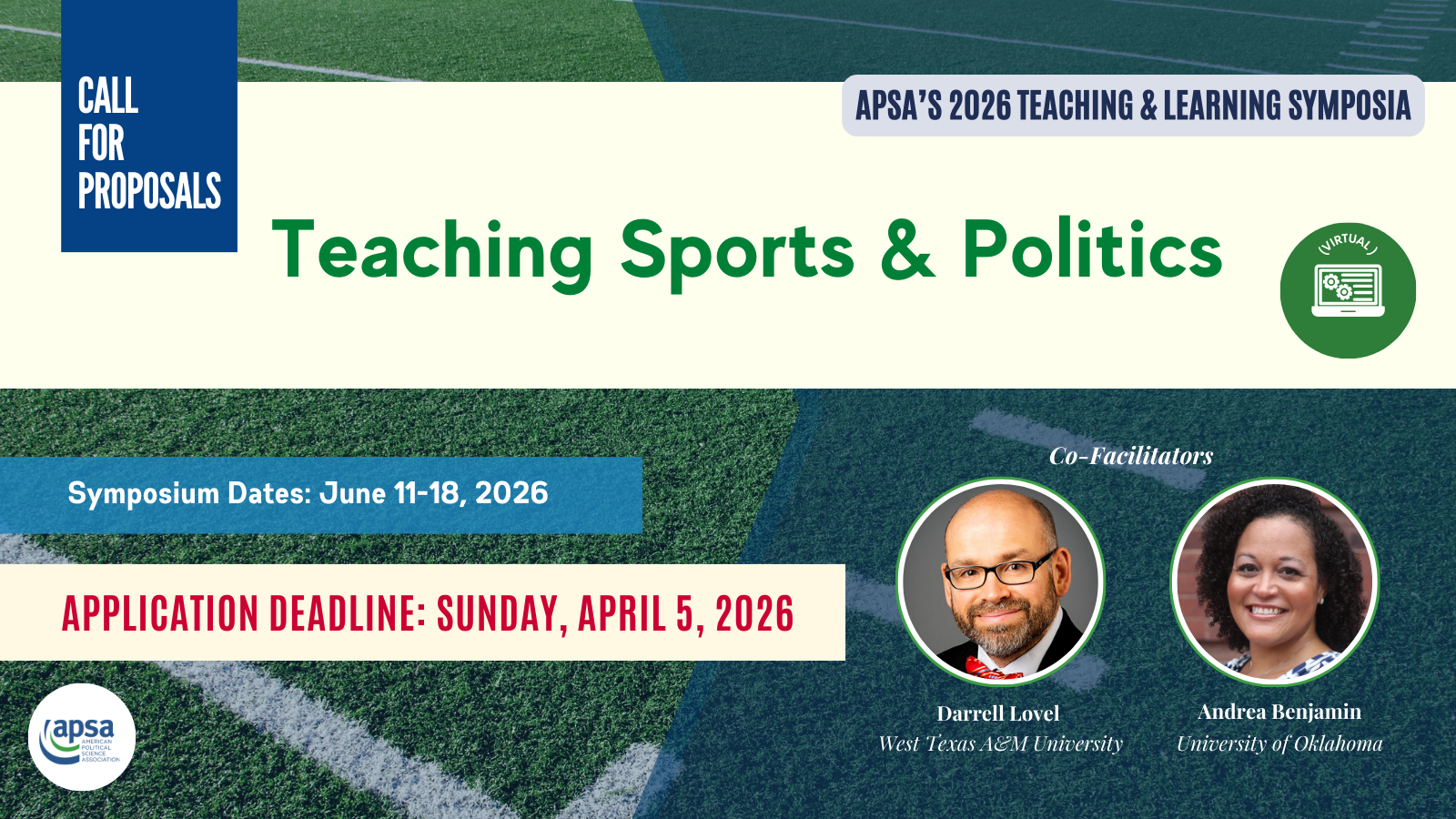
The American Political Science Association (APSA) is launching a targeted call for proposals to assemble a small cohort of political scientists for a premier virtual teaching and learning symposium. The program aims to advance pedagogical practices in political science through collaborative, inquiry-driven sessions conducted entirely online. The symposium will run via Zoom from June 11 to June 18, 2026, offering participants a focused, immersive experience designed to translate pedagogical research into actionable classroom strategies.
What Just Happened
APSA’s Teaching and Learning program has opened applications for a curated group of scholars who are actively engaged in teaching political science. The initiative emphasizes pragmatic, scalable improvements in instruction, assessment, and student engagement. By convening a compact cohort, APSA seeks to foster rapid knowledge exchange and the development of concrete teaching innovations that can be disseminated across campuses and programs after the event.
Electoral Implications for 2026
While the announcement centers on pedagogy rather than campaigns or policy battles, the outcome could influence 2026 political science education and workforce readiness. Institutions that participate may produce teaching methods that better prepare students for real-world policy analysis, legislative processes, and civic literacy. In turn, this can affect how future voters understand complex political systems, how political science is perceived as a career path, and how departments prioritize teaching excellence as a core mission in an increasingly competitive academic landscape.
Public & Party Reactions
As a professional development opportunity, reactions are likely to be positive within academic circles, particularly among faculty seeking to innovate their curricula and share best practices. Departments may notice enhanced teaching quality, stronger student outcomes, and increased program visibility. The broader public may not directly encounter the symposium, but the resulting pedagogical improvements could shape how political science is taught to the next generation of analysts, policymakers, and informed citizens.
What This Means Moving Forward
For participants, the symposium represents a chance to co-create evidence-based teaching strategies, refine assessment methods, and build networks with peers across the field. Post-symposium outputs—such as teaching guides, open-access resources, or collaborative publications—could accelerate the diffusion of effective practices. For the discipline, the initiative signals a sustained commitment to teaching excellence as a foundational pillar of political science education, with potential long-term benefits for student outcomes, academic equity, and the cultivation of critical political analysis skills.
Key Takeaways for 2026
- A focused, virtual format makes expert-led pedagogy accessible to a broad audience of institutions.
- Emphasis on practical implementations means tangible improvements in classroom and online instruction.
- The cohort approach encourages rapid cycle feedback and shareable teaching resources.
- The initiative aligns with broader trends in higher education prioritizing teaching quality and professional development.
Note on Participation
Details on eligibility, submission guidelines, and deadlines are provided by APSA’s Teaching and Learning program. Institutions and individual scholars interested in advancing political science instruction should monitor APSA communications for application timelines and criteria, as this opportunity is designed for a select group of applicants rather than a mass-call.